Odoo Inventory is the warehouse management app of the Odoo ERP. It tracks every stock move with double-entry locations, manages multiple warehouses and routes, supports barcode scanning, automates replenishment with reordering rules, and values stock in real time. It connects directly with Odoo Sales, Purchase, Manufacturing, eCommerce and Accounting, so orders trigger deliveries, receipts and accounting entries automatically.
This guide is updated for Odoo 20, released at Odoo Experience 2026. New for Inventory in Odoo 20: intercompany resupply routes, suggested minimum and maximum stock levels for reordering rules, company-specific customer lead times, a native ShipStation connector and auto-generated CMR consignment notes.
What is Odoo Inventory?
Odoo Inventory is an inventory & warehouse management application designed to handle everything from simple stock management to advanced fulfillment workflows. It supports single- and multi-warehouse operations, barcode scanning, drop-shipping, cross-docking, and more, all natively integrated with the rest of the Odoo suite.
Odoo Inventory gives you the tools to manage your supply chain efficiently and in real time when running retail operations, manufacturing businesses, or distribution companies.
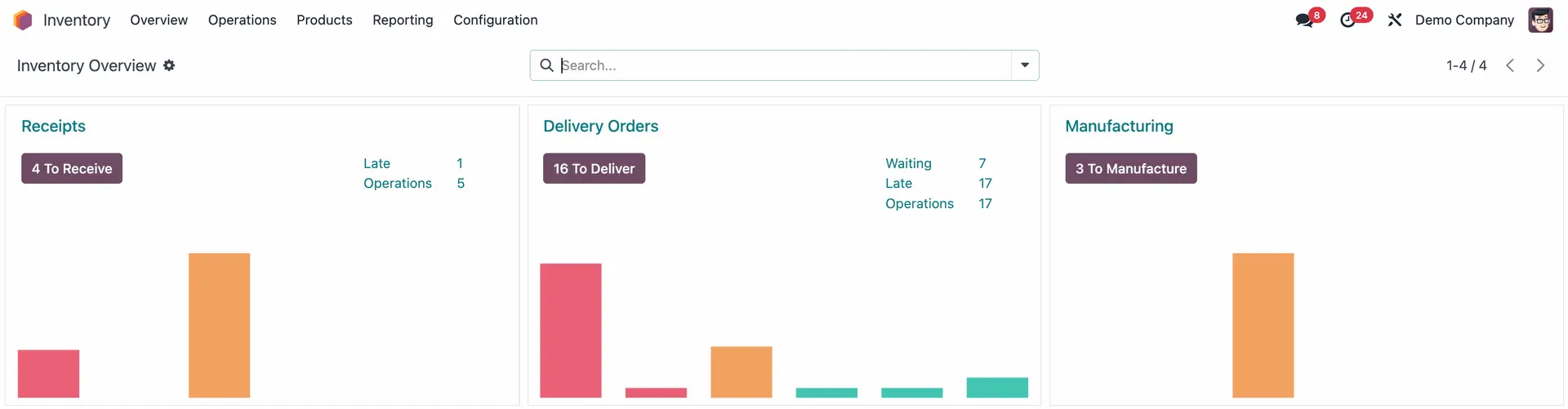
What can Odoo Inventory do?
- Smart double-entry system: Every stock move goes from one location to another, for example from WH/Stock to Partners/Customers, so quantities always balance and no stock disappears without a trace.
- Multi-warehouse support: Manage several warehouses, storage locations and routes from the Inventory Overview. Receipts and deliveries can run in one, two or three steps per warehouse.
- Barcode scanning: The Barcode app (Enterprise) runs receipts, picking, packing and stock counts from handheld scanners or a phone camera. Odoo 19 added multiscan and serial number capture from the scanner.
- Automated replenishment: Min/max reordering rules and make-to-order routes create purchase or manufacturing orders automatically. In Odoo 20, Odoo also suggests the minimum and maximum levels for each rule.
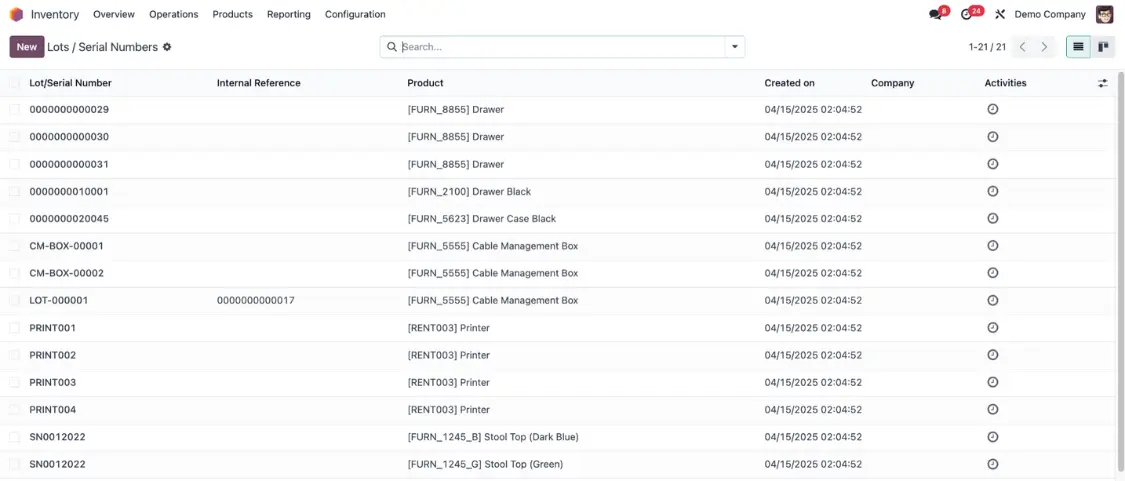
- Batch & serial number tracking: Ensure traceability for regulated products and sensitive goods.
- Dropshipping & cross-docking: Ship directly from suppliers or speed up warehouse transfers.
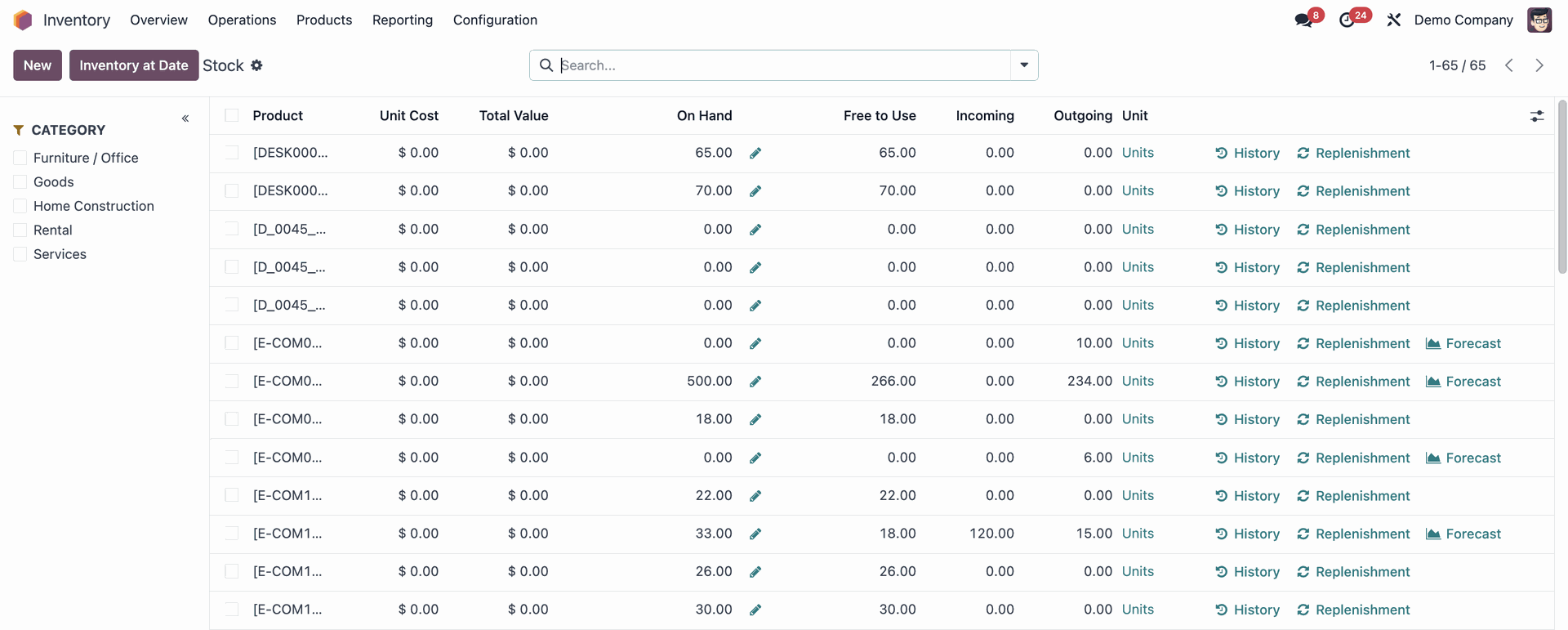
- Real-time reporting: Stock, Moves History, Moves Analysis and Valuation reports show inventory value, stock movements and product availability as they happen.
- Putaway & routing rules: Automatically assign incoming products to optimal storage locations and define push/pull routes to streamline internal logistics.
- Real-time stock forecasting: Forecast stock levels based on confirmed sales, purchase and manufacturing orders, helping avoid stockouts or overstocking.
- Seamless integration with other Odoo apps: Inventory connects directly with Sales, Purchase, Manufacturing, eCommerce, Point of Sale and Accounting. A confirmed sales order creates a delivery, and with automated valuation each validated transfer posts its accounting entry.
Because Odoo Inventory shares one database with the other Odoo apps, a sale, a receipt or a manufacturing order updates stock and accounting without re-entering data.
Which industries use Odoo Inventory?
Odoo Inventory adapts to different industries and logistics needs.
Odoo lets you design your ideal warehouse flow, supporting a range of businesses from fast-paced eCommerce operations to manufacturing plants with multi-step routing
eCommerce & retail fulfilment
Online shops and retailers share live stock figures between the Odoo website, Point of Sale and their warehouses. New in Odoo 20: products are unpublished and republished automatically based on stock.
Features like wave picking, barcode scanning, and automatic replenishment make high-volume operations efficient.
Odoo also provides out-of-the-box features for complex operations like dropshipping and ease of integration with EDI.
Manufacturing & assembly
When paired with Odoo Manufacturing, the inventory app helps track raw materials, work-in-progress, and finished goods with complete traceability.
Multi-step routing, lot/serial tracking, and backorder management ensure production stays on track.
Distribution & wholesale
Wholesalers use multi-step routes, demand forecasting and carrier integrations. New in Odoo 20: a native ShipStation connector for shipping rates, labels and tracking numbers, and CMR consignment notes generated on delivery.
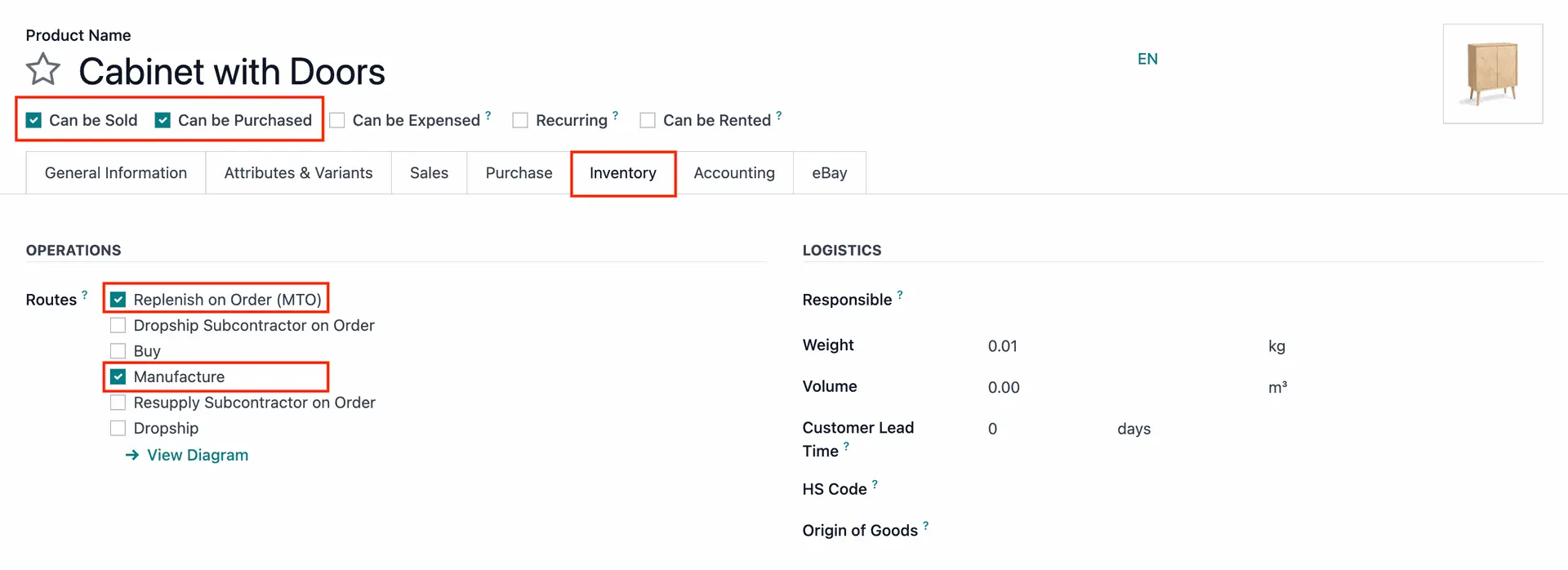
Odoo also supports scheduled transfers and custom replenishment or make-to-order rules for just-in-time inventory.
Health, pharmaceuticals & food
Odoo Inventory supports strict compliance needs with expiry date tracking, FIFO/FEFO rules, and batch-level traceability, which is essential for regulated goods and perishable stock.
See how one of our customers implemented Odoo Inventory for highly regulated MedTech requirements.
What AI features does Odoo Inventory have?
Odoo 19 added AI-driven demand forecasts and new forecast reports to Inventory. Odoo 20 goes further: it suggests minimum and maximum stock levels for reordering rules, and AI agents can run inside automations.
Odoo 20 Enterprise also includes a native MCP server, so AI assistants such as Claude or ChatGPT can read inventory data directly, within the user’s access rights. All AI features in Odoo 20 use credits bought through in-app purchases (IAP).
Here’s how AI is utilised in Odoo Inventory:
- Smart reordering suggestions: Odoo learns from past sales and lead times to suggest reorder quantities. New in Odoo 20: it suggests the minimum and maximum of each reordering rule, based on demand history, days of coverage and order frequency.
- Automated returns: Since Odoo 19, Odoo recognises a returned order, cancels the linked delivery order and unreserves the stock.
- Demand forecasts: The Odoo AI app analyses historical sales and seasonality, and the forecast feeds the min/max reordering rules (Odoo 19 and later).
- AI agents in automations (new in Odoo 20): Agents run when an automation rule is triggered or at a set time, and can create or update records.
Learn more about Odoo Inventory and AI and what’s on the AI roadmap for Odoo 19.
Where can I learn Odoo Inventory? Tutorials & documentation
Looking for more on how Odoo Inventory works in real business cases? From tutorials to workflows, you’ll find all our inventory-related articles collected here:
AI-driven Inventory Management in Odoo
Make-to-order rules in Odoo Inventory
Odoo Inventory FAQs
What are the key features of Odoo Inventory?
Odoo Inventory covers double-entry stock moves, multiple warehouses and locations, multi-step routes, barcode operations, reordering rules, lot and serial number tracking, expiry dates, dropshipping, cross-docking and real-time stock valuation. Odoo 20 adds intercompany resupply routes, suggested min/max stock levels and a native ShipStation connector.
Can Odoo automate stock replenishment?
Yes. Reordering rules set a minimum and maximum quantity per product and location. When forecasted stock falls below the minimum, Odoo creates a purchase or manufacturing order. Make-to-order routes replenish per sales order instead. New in Odoo 20: Odoo suggests min/max levels based on demand history, days of coverage and order frequency.
Can Odoo track regulated or perishable goods?
Yes. With lots, serial numbers and expiration dates enabled, Odoo tracks every batch from receipt to delivery. FEFO (first expired, first out) and FIFO removal strategies pick the right stock, and traceability reports show where each lot went. Pharma, MedTech and food companies use this for recalls and audits.
How much does Odoo Inventory cost?
It can be free of licence fees. Odoo’s One App Free plan covers a single app for unlimited users on Odoo Online, and Inventory on its own qualifies. Installing a second app moves you to the paid Standard plan. Some plans changed with Odoo 20, so check current prices with Odoo before you budget.
Is Odoo Inventory available in Odoo Community, or only in Enterprise?
Both. The Inventory app is part of open-source Odoo Community, so warehouses, routes, reordering rules and lot tracking work without a licence fee. The Barcode app for scanner-based picking and stock counts is Enterprise-only, as is the native MCP server in Odoo 20. With Community, you host and maintain Odoo yourself.
Can I check Odoo stock levels from ChatGPT or Claude?
Yes, through an MCP server. Odoo 20 Enterprise includes a native one: AI assistants connect with an MCP-scoped API key and can search and read inventory data within the user’s access rights, while write tools must first be exposed by an admin. For Odoo 16–19, Community or Enterprise, use much.’s free MCP server.
Does Odoo Inventory integrate with Amazon, online shops and shipping carriers?
Yes. Odoo eCommerce shares live stock with Inventory in one database, and the Amazon Connector imports orders and sends available quantities for merchant-fulfilled products. Carrier connectors such as DHL, UPS, FedEx and Sendcloud print shipping labels, and Odoo 20 adds ShipStation. Shops such as Shopify or Shopware connect through our Odoo integrations.
Level up your operations with Odoo Inventory
We help businesses set up and adapt Odoo Inventory, from brand-new implementations to scaling established systems. Talk to our experts to configure a setup that suits your way of work.